
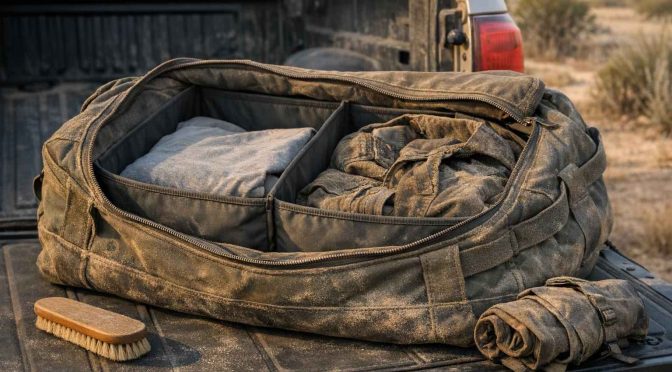
Dust is the only real external problem on your clothing and bags that becomes a problem and is a daily annoyance. The way it works into your zippers, coats, seat seams, optics cases, and bottom of duffel bags is bad enough but then all of that gear goes home with you. That's the real problem. In order to best respond to this problem you must first recognize that you will not be able to keep all of your gear clean. You will have to separate your dirty gear from your clean and choose the best materials to your needs that will brush well. Finally, you will only need to clean what needs to be cleaned.
Start with a two-zone packing system
When a number of people are loading up a vehicle for a hunt, the gear for clean layers (sleeping clothes, etc.) should be put in a separate bag from the gear for field layers (outer layers, gloves, gaiters, etc.). These bags should be opened last when loading up the vehicle to prevent dust from entering the clean gear. A sturdy laundry bag, zippered laundry dryer, etc. can be used for the clean layers, and then the bag can be sealed up until the gear is needed.
This can be a laundry bag, a zippered liner, or even a sturdy washable tote. This adds a bit of sorting before you leave, but the end result of much less dust being spread around on your trip is well worth it.
LABELING OF FOWL POSSESSIONS Label your clean layers, field layers, and any wet or dirty items before you leave for your hunt. This will ensure that all parties loading up vehicles know what to expect and prevent clothes from being dumped out on the ground.
Choose clothing that can take a brush
Fine particles of dust tend to dislodge easily from smooth, tight weaves. Brushing or gently shaking garments of smooth fabrics tends to release any loose dust. Fabrics of higher texture (e.g. fleece, brushed surfaces, etc.) will hold fine particles, especially between seams and in pockets and on cuffs, etc. of clothing.
You can choose clothing with textured surfaces. The garment will still provide warmth, move quietly, repel weather and be comfortable. But pack these items in separate bags from your clean base layers. Do not bring excess outerwear and try to wash as much of it as possible before you leave.
Empty out all the cartridge boxes, boxes of snacks, used tissues, etc. Turn clothes inside out before storing in your bags. This is especially important for clothes made of finely woven materials that can easily catch dirt and grime. A soft-bristled brush or clean hand towel is also a good item to throw in your field kit for quick dust removal of clothes as needed. A hard-bristled brush can damage finer-weave fabrics and even push grime further into fabric's weave.
Keep bags from becoming dust reservoirs
Dirt collects in the bottom of bags on the ground and is easily rubbed into seats. In particular, look for torn linings, open seams, and zippers that feel gritty. While minor failures with gear can be fixed while you are at home, minor failures with bags are much harder to fix after the bags have been used to transport dirty gear.
Dust from outer layers collects in the bottom of the outer layer bag. To prevent this, leave some room in the outer layer bag for shaking out prior to opening it for retrieval of sleep clothes, etc. A good way to utilize an inner liner is for items that must remain clean such as your clean base layers. However, an inner liner should never be sealed with damp clothing as this creates moisture that will odorize and potentially damage items to be packed in the same bag.
Whether your gear has dark or light colors does not matter much when choosing luggage for your hunting clothing. Important are a good handle, solid closures and a stable form when it is open. Then the luggage is also easy to fill and to organize. The outer appearance of the bags is of less importance.
Use a light-touch cleaning routine in camp
Rather than starting with a wash, first take all dirty clothing outside of your sleeping area. Then give each item a good shake to remove loose dust and continue to brush out any remaining dust from clothing. Start at the shoulders and work down to the hem, including the pockets, cuffs, belt loops and any folds such as the back of the knee.
Clean bag exteriors by turning removable liners inside out and using a brush to sweep out all dirt from seams. Wipe hard surfaces with a clean, lightly dampened cloth where water is appropriate. Do not spray or soak gear in water and never close up damp clothing or gear in a vehicle. Allow all items to completely dry in a shaded area before closing up.
A little bit of moisture can mean a big amount of odour and musty smells and be very bad for your gear. So only use a little bit of moisture to wipe clean any stains or marks and then allow the item to dry as quickly as possible. Do not use water to try and wash your gear as the dust could become stuck to the gear. Also be aware that repeated rubbing with a cloth could wear away the special finishes that have been put on the gear to make it durable and last longer.
Protect optics, electronics, and shared spaces
Be very careful when cleaning around the lenses of optics (binoculars, spotting scopes etc) cameras, guns with lightottes, cameras with lens caps etc. Use soft brush to brush off any loose dust before wiping clean. Remember to use the correct cleaning method for the lens as advised by manufacturer and keep all caps etc. shut when not in use. Never rub a dirty lens with a dry shirt sleeve.
In the car: cover the ground. This will help prevent field dirt from becoming interior car grime. Put field bags on washable mats, tarp or other 'car cargo' rather than on car seats. And keep your clean personal bags closed. This will stop your dirty field gear getting all over your clean clothes and bedding.
When traveling in a guided hunt, it is best to follow the specific loading of and organization of gear that your guide requests. This may include placing specific items in certain locations of the vehicle, or even separating out meat, clothing and other hunting related gear from other items. Ask the guide before moving an item that has been placed in a certain spot, especially if it is to be loaded into shared transportation or left with other gear belonging to someone else.
Decide what deserves cleaning before going home
Not everything needs to be washed. Field gear can typically be divided up into three types: 1) Items that can be cleaned and packed away; 2) Dry but dusty items that can be brushed off and stowed in a separate bag; and 3) Damp, dirty or even soiled items that must be washed as soon as possible. Ensuring these three types are stored separately is essential to preventing soils being transferred from one to another.
Unpack your field gear as you would like your clean gear to be packed and shake out all layers before throwing them into your normal laundry. Look for care labels on your clothing and wash them on the recommended setting using the appropriate detergent. As with washing clothing, it is best to wash similar items together in small loads to stop dust and grit from outer garments getting onto cleaner items.
It is best to completely empty out your clean hunting bags and then gently use a brush to remove all loose dust from the insides of the collars, pockets, and cuffs of the layers as well as the seams and the hard to clean buried areas such as in between the layers in the pack body of the duffel-style bags. Then gently spot-clean any stains as required for the specific material of the garment. Allow the layers to completely dry out in the clothing before storing them in the clean hunting bags, which should be left open or loosely closed in order to allow for any moisture or any residue from any cleaning to completely evaporate before storage.
Let care support good field decisions
Managing dust in your hunting gear is not just a housekeeping task. Organizing your gear for hunting allows you to ensure that all required items for your hunt have been packed. Moreover, having a clean, organized hunting gear allows for easy identification of hunting gear that has been damaged in some way (i.e. ripped strap) as well as identification of items that you may have forgotten at home (i.e. required medications).
Please refer to the trip information for the most current information regarding the land, wildlife access, travel, etc. Also, be sure to pack clothing for the country you are actually going to and not bring too many outer layers. Try to keep your working layers separate from the rest of your clothing and realize that some dust is just going to be there. But, try not to let the dirt interfere with any safety checks, damage any useful equipment, and create unnecessary work for yourself the following day.